Tuesday, 1 July 2014

How to Save Electricity at Home


  • 1.  Save electricity in the home by replacing all of your old Thomas Edison style bulbs with the new Compact Florescent Light-bulbs. They use about 78% less electricity without sacrificing any lumens (measurement of light output). They are getting cheaper by the day and are available in either True Light or Soft Light. Be sure to choose the one most appropriate for your needs.
  • 2.  Turn off your computer if it isn't completing any overnight maintenance tasks or enable the Standby or Sleep Mode, as recommended by Energy Star. It will help ensure that the computer uses as little energy as needed. Or, at the very least, turn off the computer screen to save a few pennies. It's just a switch and it won't affect anything the computer is doing.
    Another suggestion is to pack up those old desktops in favor of the more lightweight and energy-efficient laptops. They consume less than 1/3 of the energy with almost all of the benefits of a desktop.
  • 4.  The refrigerator and freezer are the most energy consuming appliances we have in our homes. They are on 24/7 non stop. Some are more efficient than others and they need to work hard to keep your food cold.
    Buy the best rated energy-efficient refrigerator on the market within your budget. If you insist on using a deep freezer, pick a size that suits your needs. Avoid placing them in a warm place like the kitchen. Opt for the basement or garage where it is already cooler. That way the freezer won't have to work extra hard.
    Also, don't forget that refrigerators pose a real hazard to the environment when not disposed of properly. Take the time to take them to a proper recycling facility.
  • 5.  Air-conditioners love to suck electricity. Acting on the same principles as the refrigerator and freezer; these things are on 24/7 during those warm days. If at all possible avoid using them by finding other ways to stay cool. Plan to spend the day at the mall or see a movie at the theater during the peak sun times. Leave your blinds shut during the day and leave the windows open at night to let in a nice cool breeze.
    Also, try using a dehumidifier to help draw the moisture out of the air.
  • 6.  Electrical vampires are little devices that use electricity merely by being plugged into the wall. This could be a phone charger, entertainment system, stereo... basically everything else. You've probably noticed that after turning off your television you see a glowing blue dot signifying that it is off. Well these small lights add up to serious costs in the long run so here's what you do.
    Purchase power-bars with timer settings on them. Plug your TV, Stereo, DVD player, Xbox, Wii, everything to it. So when the timer turns the power-bar off you'll be certain no juice is flowing into your expensive electronic equipment.
  • Sunday, 29 June 2014

    Importance of Electricity


    Electricity has become quite common in today’s world. Everybody loves what it can do and loves the level at which it is being used. The street lights work on electric current. Fans in the court, office rooms, homes, etc. all work on electricity. Trains and trams too run on the power on electricity. Hence electricity is no longer a strange thing.

    The discovery of electricity happened some six hundred years ago. It was a little later that the American scientist Benjamin Franklin proved the existence of electric power in the clouds with the help of a kite. The lightening from the clouds is nothing but the discharge of electricity.

    Electric power is generally generated from the waterfalls and dams through an artificial process. Electric power is also collected from the coals by installing thermal stations near the coal mines. Did you know? The heat under the earth and the heat from the Sun can also be turned into electric power. However the present era is the era for electricity, wherein it is used practically everywhere. The large scale industries are easily run by the use of electric current. A number of small scale industries get into guild system and take the help of electricity. The railway trains, trams and buses are moved by the power of electricity. Hospitals too have great use of electricity. The X-ray machines, great surgical treatments are done in the darkest nights only with the help of this great discovery called electricity. Machines of the radio-set, television and telescope work with the help of this power. Cold-storages have been possible only thanks to the electric power. Medical wards and cinema houses are air-conditioned only with the help of electricity. Many individuals use electricity to make their personal living more comfortable. Today a number of cars are being designed which can work on electricity.

    In India, we need much more electricity to work out our projects. We have enough scope and potential in our country to install large number of power-plants. Let us hope for the day when the Indian farm-works and farmers will be mechanized with the help of the electricity.

    Thursday, 26 June 2014

    Saving Electricity Tips

    The biggest electricity users in the home tend to be heating and/or air conditioning, water heating, washing machines, tumble dryers, dishwashers, lighting, and the refrigerator. When looking to save electricity, spend the most time focussing on these big energy hogs to get the biggest effect for your efforts.

    Here are a selection of tips to help you to reduce your electricity consumption:

    1. Turn off your television, video, hifi, playstation, and other entertainment devices when they are not being used.

    2. Do not leave your television etc in standby mode. Devices can use up to 90% as much power in standby mode as when they are on, so it is a serious waste of energy when a device is left constantly on standby. If you keep forgetting, consider purchasing a PowerSafer - a device which automatically cuts power to appliances when they go into standby mode.

    3. Replace all of your inefficient incandescent light bulbs with energy efficient CFL bulbs. Replace halogen spotlights with much more efficient and longer lasting LED Spotlights.

    4. Hang your clothes out to dry rather than using an electric tumble dryer. Ideally use a spin dryer before using the tumble dryer.

    5. Cook many items at the same time when your electric oven is hot.

    6. Use a microwave to reheat food or to cook small portions. Although a microwave uses a lot of power, it does so over a very short time and so saves energy overall.

    7. Turn down your heating system thermostat. For every degree you lower your heat between 60° and 70° F you can reduce your heating bill by up to 5%. Wear an extra layer of clothing in the house so that you stay warm. Turn down individual radiators - for example, 16°-18° is warm enough for bedrooms whereas 20°-22°C is more comfortable in bathrooms. Rooms that are rarely used can have their heating turned all the way down or off.

    8. Purchase energy efficient white goods (washing machines, tumble driers, fridges etc). Although they usually cost a little more initially, the cost savings in electricity will cover that many times over. As an added benefit, efficient items are usually better made and last longer than inefficient models.

    9. Vacuum clean the condenser coils at the back or underneath your fridge freezer. Accumulated dust reduces their efficiency by up to 25% adding that cost to your electricity bill.

    10. Keep your fridge full, but not so full that air cannot circulate properly.

    11. Fold clothes straight out of the tumble drier while they are still warm to save on ironing.

    12. Cool cooked food before you put it into the fridge.

    13. Do not put uncovered liquids into the fridge. Their evaporation will make the fridge have to work harder.

    14. Heat only as much water as you require for drinks and cooking. If you keep forgetting, purchase an energy efficient eco kettle energy efficient ECO Kettle.

    15. Use a convection oven. A small fan inside circulates hot air throughout the oven cutting cooking times by up to 30%.

    16. Don't preheat the oven for roasting.

    17. Don't keep opening the oven door. Every time you do so, your oven loses 20°C of heat.

    18. Put lamps in the corner of a room so that the light is reflected off two walls.

    19. Turn down the temperature on your washing machine. Heating the water uses the majority of the electricity, so by doing a warm wash instead of a hot wash, big savings are possible. 

    20. Defrost frozen food in the fridge since this helps to cool the fridge.

    21. Running a full load in an efficient dishwasher will use less hot water than washing up by hand in the sink! Save money, save time, and save electricity.

    22. Boil water in a kettle rather than on a hob to save 50-70% of the energy and to get your water boiled faster.

    23. In the summer use ceiling fans on a fast setting instead of air conditioning to keep cool. In the winter, running the fans slowly will push warm air collected at ceiling height down to where you want it. (If the slowest setting on your fan is too strong, reverse the direction of the fan in the winter so that the accumulated warm air is blown up against the ceiling and bounces more gently down around the walls and into the living space.

    24. Use the recommended depth of loft insulation, and consider cavity wall insulation or external solid wall insulation for which grants are available.

    25. Turn off the lights when you leave a room.

    26. Separate items when moving them from the washing machine to the tumble dryer. When everything is tangled up together in a lump the drying cycle takes longer using more electricity.

    27. Keep your freezer full. A full freezer uses less electricity than an empty or partially full freezer.

    28. Defrost your fridge and freezer regularly.

    29. Keep the contents of your fridge and freezer tidy so that you can find what you want quickly and not leave the door open for a long time.

    30. Use the smallest pot you can to heat food, and keep the lid on to speed up heating and use less power.

    31. Fan ovens use less power than non-fan ovens, and pressure cookers use 25% less power.

    32. Turn off kitchen and bathroom extractor fans as quickly as possible in the winter since they are sucking the expensively heated air out of the house.

    33. Close curtains and blinds before it gets dark (and cold) outside. Make sure they are open in rooms which face the morning sun so that rooms can be heated by solar power.

    34. Seal leaks around windows and doors to reduce cold draughts and lower heating bills.

    35. Thaw frozen foods before cooking.

    36. Iron clothes in a large batch rather than piecemeal.

    Wednesday, 18 June 2014

    6 Tips to Save Electricity

    Turn Appliances Off

    • According to Electricity Guide, appliances that are left on "stand by" modes use 85 percent of the power they would normally use if turned on. Completely powering down your computer, video gaming system and other appliances can save electricity and help you lower your electricity bill. If certain appliances lack an off switch, consider unplugging these devices when they are not in use. Additionally, avoid using appliances during peak electricity hours, which run daily from 4 p.m. to 6 p.m.

    Use Energy-Efficient Bulbs

    • About 10 to 15 percent of your home electricity bill is devoted to lighting. Energy-efficient light bulbs like compact fluorescent bulbs and light emitting diode bulbs devote more power to light than conventional bulbs, which actually expend more of their energy as heat. Using these energy-efficient bulbs in your home can help save electricity, lower your energy costs and cut the costs of replacing bulbs since energy-efficient bulbs last up to 10 times longer than conventional bulbs.
    • The dryer uses the most electricity in your home, second only to your refrigerator. Eliminating it from the clothes washing process whenever possible can help save electricity and lower your energy costs by as much as five percent, according to the Consumer Energy Center. If it is absolutely necessary for you to use the dryer, keeping the drying time to a minimum can help mitigate the cost of energy use.

    Clean or Change Air Filters

    • Air filters can become clogged or damaged, forcing appliances like air conditioners to work harder to achieve comfortable indoor temperatures. Cleaning or replacing these filters can help lower your energy costs. This is particularly important in the summer months, when electricity bills tend to be higher.

    Install Ceiling Fans

    • According to Consumer Savvy Tips, installing ceiling fans in your home can reduce energy costs by allowing you to keep your thermostat at a higher setting. Fans that are set to blow air downward can work to cool the air more efficiently than a single air conditioner, while fans that blow air upward may recirculate hot air through the room and increase the temperature.

    Open Up The Windows

    • The air outside your home may actually be cooler than the air inside. Opening up your windows can significantly cool down your home during those early summer months and help your cut down your electricity bill. If you have ceiling fans installed they can help pull the air inside the home, keeping your hands off the thermostat.

    Electricity-Saving Tips

    Energy-efficient Lights

    • Lightbulbs are one of the most commonly used electrical appliances in most homes. It is not uncommon for a home to have several lightbulbs on at the same time for the majority of the day. Since lightbulbs are used so frequently, it is important to use ones that use energy more efficiently to reduce electricity consumption. Standard lightbulbs are called incandescent bulbs---incandescence is light created from heating up an object. The problem with normal bulbs is that a large amount of energy is lost in the form of heat, which makes them inefficient. Compact fluorescent lamps, or CFLs, are energy-efficient bulbs that produce light using florescence, which generates less heat and is therefore more energy-efficient than a normal bulb. Replacing standard lightbulbs with CFLs as they burn out is a good way to save electricity. CFLs do cost more than normal bulbs, but they also last much longer, which results in savings over time.

    Refrigerator Use

    • Refrigerators require a large amount of electricity to run, and are on all the time to keep food cool. When the fridge is shut, it only needs to use a certain level of electricity to maintain the air temperature, but every time it is opened, it must work harder to cool the air, since hot air will get inside. To reduce the amount of electricity your refrigerator uses, limit how often you open it. To do this, decide upon the items you want to take out of the fridge before opening it, and strive to locate and take the item quickly to keep as much cold air inside as possible. Setting the temperature level of the fridge higher will also save electricity, but do not to set it so high that your food goes bad. By using food fairly soon after purchasing it, you may be able to run your fridge at a higher temperature without allowing food to spoil.

    Unused Devices

    • Another important part of saving electricity is making sure no appliances are draining electricity when you are not using them. Whenever you leave a room, turn off the lights and other electrical devices that are on. Refrain from keeping a TV on when you aren't watching it, and turn off computer monitors when you are out of the room. You should also shut down your computer at night to keep it from using energy during the evening. It is also important to note that many electrical devices can use up electricity even when they are not turned on. Simply having a device plugged into a wall socket may result in wasted electricity. Make it a habit to unplug all devices from wall sockets when they are not in use. Things like cell phone chargers, hair dryers, and AC units are common culprits of wasting electricity.

    Sunday, 15 June 2014

    Facts on Saving Electricity

    Facts

    • One of the most important concepts when considering how to save on electricity begins with the actual building and design of a home or building. According to John Theodore Houghton, author of "Global Warming: The Complete Briefing," options that offer the largest savings are found in the areas of commercial lighting and air conditioning, and in residential appliances and space heating. If you are building a new home or remodeling, keep in mind ways to cut back on electricity.

    Appliances

    • Over the past decade, many appliance companies, such as Maytag, have begun offering consumers products that use significantly less electricity than appliances of the past. Energy-efficient electrical appliances can save homeowners thousands of dollars each year.
      A simple way to save electricity is to purchase appliances with a good Energy Star rating. The government-endorsed Energy Star program promotes energy efficiency and is designed to assist homeowners in reducing electric bills, while protecting the environment.

    Insulation and Windows

    • Your home's inadequate insulation and leaky windows can cause you to lose valuable electricity dollars during both the summer and winter months, when heating or air conditioning is used most.
      Attics and walls should be properly insulated when built or remodeled. This keeps warm and cold air in a home longer, so that you need to use less electricity for comfort. Well-insulated walls discourage drafts, allowing less outside air into the home.
      Maintaining windows also creates fewer energy leaks, helping you save on electricity costs. During winter months, you can cover unused windows in plastic to prevent heated air from leaking out, and you should also make regular checks to be sure that your windows are shut properly.

    Computer Usage

    • Many homes have at least one computer. A computer uses a lot of electricity; however, you can easily cut back on its use.
      First, you should turn off your computer when you're not using it. If you leave a computer in "sleep mode," the machine will continue to draw small amounts of electricity even though it is not being used. Also, most computers have an "energy saving mode." Look in your computer's options menus, and use the energy-saving options when possible.

    Protecting the Environment

    • One of the most compelling reasons for reducing electricity usage is to protect the environment. The power plants that produce electricity are fossil fuel-based. These plants produce carbon dioxide, which deteriorates the earth's atmosphere and leads to environmental problems such as global warming.
      According to SaveOurEnvironment.org, "Recent analyses by the Union of Concerned Scientists (UCS) found that requiring 20 percent of electric generation from renewable energy sources by the year 2020 would create over 355,000 new high-paying jobs and save consumers at least $49 billion on their electric and natural gas bills."

    Thursday, 12 June 2014

    8 Easy Steps on How to Save Electricity


  • 1.  Replace your light bulbs with energy efficient CFL ones.
  • 2.  Turn off lights when you leave a room.
  • 3.  Do not keep the TV on as background noise when you are not watching it.
  • 4.  Ensure you don't have phantom electricity loss. Even when unused, plugged in electrical appliances use a small amount of electricity. Either unplug appliances you are not using, or plug them into a power strip and turn off the power strip when you are done.
  • 5.  Wrap up - wear a sweater, a hooded sweat shirt, sweatpants, socks, a plush slipper, and a hat; only after this should you turn on the heat if needed.
  • 6.  Hair dryers use a lot of electricity. Dry your hair half way, and then let it air dry. Better yet, don't wash your hair every day. Some experts say washing hair every day strips away the oil your scalp produces and harms the hair.
  • 7.  Air dry laundry. Hang the wet clothes in hangers in your closet, but keep the closet door open. Don't do this if you have a mold problem.
  • 8.  Use the light soil wash cycle on your washing machine.
  • Tuesday, 10 June 2014

    How to Save Electricity


    Most people want to save electricity, and lower their electric bill but they don't want to cut out things you need. You could stop throwing away money on your electric bill every month by saving electricity with these simple steps. 

    1. To save electricity on appliances keep everything unplugged including the toaster, blender and any other kitchen appliance.

    2. Unplug the computer when it is not in use. This does not affect the computer, and they will draw a small charge when not in use. This simple step can save electricity that is being used for hours every day.

    3. Keep all chargers unplugged, especially laptop charges, GPS chargers and anything else. These use electricity when not in use.
  • 4. Turn off the water heater when you go on vacation, and if you really want to save electricity, turn it off during the day. This simple step can save an enormous amount of electricity every month.
  • 5. Remove halogen and incandescent bulbs and replace them with compact fluorescent bulbs in every lamp and ceiling fixture. These bulbs will save a great deal of electricity because they are so energy efficient. You will save $75 for every $100 in energy spent on regular lighting costs. That is a great way to save electricity.
  • 6. Keep DVD players, TVs and other audio and stereo equipment plugged into a multi-port surge protector which you can turn off with one simple switch. This allows you to save electricity the easy way, by just turning off the main power port switch.
  • Saturday, 7 June 2014

    Five Cs of Electricity Consumption

    Cooking Costs

    Let's start with preparing your meals. If you find yourself getting ready to reheat some leftovers from the night before, consider using your microwave. It will save you as much as 40% in electricity cost and will take considerably less time than heating your leftovers on top of the stove.

    If you're only preparing meals for one or two people, use the smaller burners on your stovetop. They use less energy than the big burners, and generally won't take any longer to prepare your meals. If you want to save even more, get a meal started in your crock pot before you head off to work. That way, it will be ready to eat when you get home, and you will have saved a considerable amount of electricity in the process.

    Computers: A Surprising Charge

    You don't always have to save huge amounts of energy to see a drop in your electric bill. For instance, just leaving your computer monitor on all the time can cost you nearly $18 a month (approximately 60 cents a day).

    Cell Phone Chargers

    If you leave your cell phone and battery charger plugged in, you'll pay $1.50 a month for the privilege. That might not seem like much, but small things like that represent a giant energy drain on the country when combined, to the tune of more than $8 billion a year, according to the Alliance to Save Energy.

    Clothes Washing

    Another place to realize significant savings is your washing machine. It used to be that laundry needed to be washed in hot or warm water to kill germs, but with the advances in detergents, most clothes get just as clean and are just as germ-free when washed in cold water. Not heating large quantities of hot water for washing clothes can save you a considerable amount of money each month.

    Climate Control

    Setting your thermostat a little lower in the winter and a little higher in the summer can also save significant sums of money. This is especially true if you've going to be out of the house for any length of time during the day. Even a few degrees up or down can save more than $100 a year on heating and cooling costs, according to Alliance to Save Energy calculations.

    All in all, it won't take a huge effort or sacrifice to save yourself significant amounts of money on your electric bills every month. Look at your lifestyle and the things you use around the house every day. Do they really need to be on all the time? Can you do the various things you do on a daily basis in a different way that will use less electricity? All it takes is a commitment to begin paying attention to the many small energy-draining details that can make a noticeable difference in your overall energy usage.

    Tuesday, 3 June 2014

    Save Electricity for the Environment


    Saving electricity helps the environment with less production. Even if you're not interested in saving money on your electric bill, you can help the environment by cutting down you home's consumption of electricity. 

    However, as energy costs continue to rise, you may be among the millions of Americans who are looking for ways to save electricity around the house. Here are some ideas that can save you small amounts of money in themselves, but can add up to significant savings when taken altogether.

    Saturday, 31 May 2014

    Efficiency of Electric Cars


    Electric vehicles are known to be very efficient. Cars with internal combustion engines are not, losing most of their energy as heat. EV advocates have been saying this for years, and there is a ton of data about the efficiency of gasoline and diesel cars. But electric cars are newer and there are few of them, so we've had less documentation...until now. Some Belgians have been given the opportunity to study a fleet of five cars.
    There were Peugeot Ion models, exact clones of the Mitsubishi i-MiEV (European version), and the people monitoring them were from Laborelec, with support from Brussels' Vrije University, which has a facility dedicated to automotive technology. The study was funded by Electrabel, the Belgian utility. It lasted two years, but the first part of the story was to define a methodology. A precise, dedicated monitoring system was developed, and things only got started when it received a full approval from the car manufacturer.

    Tuesday, 20 May 2014

    Save Electricity in the Bathroom


    Investing in an energy-efficient showerhead will not reduce your shower experience, just your electricity bill.

    - Do not let the hot water run unnecessarily. Use cold water to wash your hands instead of hot water.

    - Use a basin plug when washing.

    - Shower instead of bathing. You will save up to 40% in water and use 5 times less electricity than heating bath water.

    - Switch to a low-flow, energy-efficient showerhead. If the water pressure in your house is low, rather use an aerated showerhead instead of a flow restrictor. The minimum pressure on your geyser should be more than one bar.

    - How to check whether your existing showerhead is energy- and water-efficient:
    • Hold a bucket under the showerhead for 12 seconds.
    • Measure the amount of water in the bucket with a measuring jug.
    • If more than 2 litres has collected, your showerhead is inefficient and should be replaced by a low-flow, energy-efficient showerhead.

    Friday, 16 May 2014

    Save Electricity in the Kitchen


    The easiest way to save electricity in the kitchen is to use specialised appliances for the appropriate tasks. For examples, always make toast in a toaster instead of using the oven.

    COOKING

    - Ensure the oven door is kept closed until the food is done. Constantly opening and closing the oven door dissipates heat, and electricity is wasted in reheating the oven.

    - Only use pots and pans that completely cover stove plates. Also keep stove plates and reflectors clean to ensure all the energy is being used to cook the food.

    - Use a pressure cooker when preparing foods that take a long time to cook. It will speed up the cooking process and save electricity.

    - Turn off the stove before you’ve finished cooking. Hot plates retain heat and will continue to cook your food while saving electricity. Alternatively, bring food to the boil on the ‘high’ setting and then turn down the plate to simmer until cooked. Keep the lid on the pot to retain heat.

    - Use the microwave for small to medium amounts of food. Leave the large meals to a conventional oven.

    - When using a kettle, boil only as much water as you need.
    - Invest in a Hot Box for approximately R150 and save up to 60% on cooking costs. A hot box insulates your cooking pot so that it retains the initial heat. Foods such as rice, porridge, soups or stews can be brought to the boil on the stove and then placed into the Hot Box to continue the cooking process. Alternatively, you can also simply wrap the pot in a blanket. The blanket will keep the heat in and the food will continue to cook.

    - Buy a stove with a convection oven / The other best choice is to use a gas hob with an electric oven, or a gas ring and electric hotplate, from an environmental and financial point of view.

    REFRIGERATION

    - Don’t open the fridge door unnecessarily or leave it open for too long. Cold air sinks so it literally falls out of the fridge, and so your fridge has to start again. An empty fridge has to work hard to keep things cold so put bottles of water in the fridge as these ‘hold onto the cold’ – equally, an overfull fridge also has to work too hard.

    - Let hot food cool down before putting it in the fridge. It will require less electricity for further cooling.

    - Empty your fridge and switch it off when you go on holiday.

    - Defrost your freezer regularly. This will ensure it runs more efficiently.

    - Have the seals in your fridge replaced to keep the cold air in.

    DISHWASHING

    - Washing dishes by hand can use twice as much electricity as a dishwasher.Dishwashers use up to nine times less water than hand washing.

    - Only use the dishwasher when it’s full.

    - Link the dishwasher to the cold water supply. The dishwasher heats the water itself and only requires hot water for one wash and one rinse cycle. If the dishwasher is linked to a hot water tap, it will draw power for the full duration.

    - Turn the dishwasher off before the drying cycle. Use a cloth to dry the dishes/ let them drip-dry.

    - When buying a dishwasher: Choose a model that uses less water. A water efficient dishwasher uses up to 50% less water than a conventional one, which means 50% less water to heat up.

    - Choose a model with a no-heat air-drying feature to save even more electricity/an option not to use the dryer.

    Wednesday, 14 May 2014

    PowerSafer

    Save electricity with a PowerSafer - a device which cuts power to appliances left in standby mode


    PowerSafer Logo

    Many televisions, DVD players, games consoles, HI-FIs etc continue to use electricity even when they are switched off using the remote control and left in stand-by mode. A significant amount of energy (and money) could be saved if everyone physically turned off or unplugged these appliances when not in use. On average in the UK standby power* is responsible for more than 10% of domestic electricity usage. This means the average household pay out well over £30 per year for wasted electicity.
    You can use a UK Power Meter to measure how much electricity you electrical appliances use in standby.

    PowerSafer is an innovative German product which has the effect of turning off appliances at the main power button, but still permits the remote control to be used to turn them back on again.

    PowerSafer


    PowerSafer

    PowerSafer (pictured above) is simply plugged into the wall power point, and the appliance plugged into the PowerSafer via a standard 3-pin socket. PowerSafer can be used to with any appliance which has a physical on/off switch, and a remote control. After the appliance is put into standby modewith the remote control, PowerSafer separates it completely from the power supply.

    PowerSafer is currently available in two models PowerSafer TV (PS 1.1) for controlling one television, and PowerSafer Hi-Fi & AV (PS3.m) which will control TV's, DVD players, games consoles, hi-fi equipment, and home theatres. (The new PSX model is mentioned at the bottom of this article.)

    PowerSafer PS3.m can be used with up to four electrical appliances at the same time. The unit is extended by using a multi block connected to the PowerSafer socket.

    Benefits of PowerSafer

    In addition to the obvious benefit of saving electricity (and therefore saving money and reducing emissions), the life of electrical appliances can be increased by 15% if they are not left in standby for hours every day. 

    In a typical home PowerSafer should pay for itself easily within one year just in cost of electricity savings.

    How Does PowerSafer Work

    When an electrical appliance is put into stand-by mode there is a detectable drop in power used. 10 seconds after PowerSafer observes this drop in power it cuts the electricity supply to the appliance (by breaking a relay contact). While in this off mode, PowerSafer itself consumes <0.3 Watts of electricity.

    PowerSafer has an infra-red detector. When a remote control is used nearby, PowerSafer automatically switches on sending power to the electrical appliance(s). If, for example, you typically press the power on button on the TV remote control to switch on the television, with PowerSafer you may have to press the button twice - once to wake up PowerSafer sending power to the television, and once to control the television which will still be instandby mode.

    When the appliances are on, PowerSafer itself uses approximately 8 Watts of electricity.

    PowerSafer PSX


    PowerSafer PSX

    At the end of May 2007 a new PowerSafer model will be launched in the UK - the PSX (pictured above). This will offer all the benefits of the currentPS3M model pictured earlier plus lightening and current surge protection. 

    Monday, 12 May 2014

    Save Electricity when Doing Laundry

    Appliances in the laundry room hike up your monthly bill. Cut electricity costs by investing in energy-efficient appliances with modern settings.

    WASHING MACHINE
    - Only use your washing machine once a full load of dirty laundry has accumulated. Automatic washing machines use the same amount of electricity for a full load as they do for a single item.

    - Use cold-water or lower heat settings as often as possible.Wash bed linen at 60* (instead of 90*) to cut back on the amount of electricity you use.

    - Skip the pre-wash cycle for clothes that aren’t particularly dirty. This can cut down hot water usage by up to 20%.

    - Never overload your automatic washing machine. Overloading will reduce the cleaning action. Varying the sizes of garments in a full load improves the cleaning action by allowing free circulation.

    - Take advantage of special features on your washer that can save money. For example, soak cycles remove stubborn stains in one wash cycle.

    - Invest in a front-loading washing machine instead of a top loader. It uses less water and costs less to operate. Also ensure the new machine offers a variety of water temperature settings.
    TUMBLE DRYING
    - Hang your clothes outside to dry. If possible, avoid using a tumble dryer altogether. Do your laundry on a sunny day, or use an indoor drying rack to dry your clothes.

    - Remove excess water before putting clothes in the dryer. This minimises the drying times required.

    - Dry multiple loads of clothes consecutively. Your dryer will be warm already so you’ll save energy.

    - Make sure the lint filter in your tumble dryer is cleaned.

    - If you’re buying a new tumble dryer, choose one with Electronic Humidity Control (EHC). It shuts the machine off automatically when clothes are dry instead of relying on a timer.
    IRONING

    - Only iron what really needs to be ironed. Certain clothing will appear ironed with careful folding.

    - Iron large batches of clothes at a time. This saves the iron from needing to be reheated.

    - Complete the last of your ironing with the iron switched off. An iron consumes as much energy as ten 100W light bulbs so let some of that stored energy work for you.

    - Only use distilled or boiled water in a steam iron. This will keep it clean and energy efficient.

    - Invest in a thermostatically controlled iron to prevent it from becoming hotter than you need.

    Sunday, 4 May 2014

    Eco Kettle

    Save electricity with an efficient eco kettle with temperature control


    After the original energy efficient Eco Kettle, and the next generation Eco Kettle 2 - Chrome launched in August 2009, the new improved Eco Kettle 3 is now (June 2011) available.

    Energy Efficient Eco Kettle 3

    The new Eco Kettle 3 features the same dual chamber design as Eco Kettle 2 enabling it to be filled with 1.5 litres of water, but only heat as much water as you actually require. It also comes with the same high spec chrome finish. The new clever feature Eco Kettle 3 offers is temperature control.

    Almost all kettles are designed to be filled with water, turned on, and then run until the contents are boiling. There are however many situations where water at boiling point is too hot, and so heating it that much is just a waste of energy - for example, coffee is best made with water heated to only 90 degrees Celcius, and some speciality teas are best brewed with water heated to just 80 degrees Celcius. Eco Kettle 3 therefore has three temperature settings - 80 degrees, 90 degrees, or boiling. You just select the temperature setting you require, press the button, and the kettle will automatically turn off when the water is at the desired temperature.

    The new Eco Kettle still has the 360° base - i.e. the cordless kettle can be put onto the base facing in any direction for convenience, a washable limescale filter, and Strix steam control and boil-dry protection. It also has internal illumination, illuminated buttons, and audible 'ready' signal, and a locking lid.

    Eco Kettle 3 is supplied with the usual 12 month warranty.

    According to independent trials, Eco Kettle 3 uses an average of 31% less energy than any other kettle.

    Thursday, 1 May 2014

    Ways To Save Electricity

    Find out how you can save save electricity in your home - Help the environment and save money.
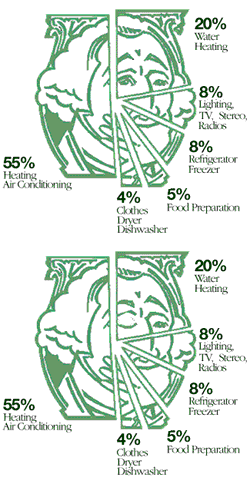
    Where do we use the electricity in our homes?
    Every year electricity gets more and more expensive. Read on to find out how you can save electricity and money with this handy selection of energy saving tips.

    Electricity Usage Monitors


    The basic figures contained within a monthly or quarterly electricity bill do not give you much information as to where your electricity is going - they just tell you how much you have used in total during that period. Therefore it is well worth considering purchasing an electricity usage monitor and using it to see exactly where all your hard-earned money is going.

    One great way to find out how much electricity each of your household appliances and electronic devices uses is with a power/energy meter.

    Owl CM160 USB wireless energy monitor

    Alternatively consider investing in one of the latest wireless energy monitors which show you exactly how much money your total home or office electricity usage is costing you - in real time. For example: Owl CM160. These meters can help you reduce your electricity consumption by as much as 20% simply by showing you what you are using.

    Thursday, 24 April 2014

    Tips on Saving Electricity 3

    1. Save on electric water heating


    If you only use an electric water heater at certain times of the day, you’re wasting electricity keeping the water hot 24/7. To solve that problem, install an electronic timer switch (Photo 1; sold at home centers). Timers are available for 120- and 240-volt heaters. They can be programmed for daily or weekly schedules so you only heat the water when you need it. A timer can save you $25 per year.
    To make your water heater even more efficient, drain the tank and flush out the sediment at the bottom (Photo 2). Otherwise, you could be heating through inches of sediment before heating the water.
    If your electric water heater is warm or hot to the touch, it’s losing heat. Wrap it with an insulating blanket (sold at home centers).

    2. Get smart metering


    Smart metering programs vary among utility companies, but the basic idea is the same: The utility installs a special “smart” meter that tracks how much electricity you’re using. The utility uses that data to make sure its power grid doesn’t get overloaded and cause blackouts. If the grid nears capacity, the utility can shut off major appliances in homes for short periods of time (such as 15 minutes per hour). Not all companies offer smart metering, but some do and many others are considering it.
    What’s in it for you? Money! Some programs pay for signing up. Others let you view your home’s usage online in real time so you can better manage your electrical consumption. Others let you choose “real-time” or “time-of-use” pricing that allows you to pay less for electricity that’s used during off-peak hours (for example, on weekdays from early afternoon until 8 p.m.). These plans reward you for using electricity when it’s cheapest. Smart metering makes the most sense if you’re away from home all day—you won’t notice or care if things get turned off (although it’s a good idea for everyone else too!). According to SRP, a power utility company, the plans cut 7 percent off your bill, which is $140 for the average $2,000 yearly energy bill. Check with your local company to find out what smart metering programs are available in your area.

    3. Run your refrigerator for less


    Your refrigerator uses more electricity than all your other kitchen appliances combined. To keep its energy costs down, clean the coils twice a year, which improves efficiency by 30 to 50 percent.
    Your fridge and freezer run more efficiently when they’re full. Put water containers in the fridge and ice bags in your freezer to keep them filled. Keep the refrigerator setting between 35 and 38 degrees and the freezer between 0 and 5 degrees F.
    Refrigerator door seals wear out over time. Test your seal by closing a dollar bill in the door. If it pulls out easily, replace the seal.
    If your fridge was made before 2001, it’s using at least 40 percent more electricity than new Energy Star models. If you’re replacing your fridge, buy an Energy Star model and recycle your old one. Don’t hook up the old one in the basement or garage—an inefficient refrigerator costs as much as $280 a year in electricity. Any money you save buying food in bulk and storing it in an inefficient second fridge is lost in electric costs.